- Cycle through Pu Luong's rice terraces and stop at a weaver's home in Lan village
- Catch mudfish with rattan traps alongside farmers in the paddies of Ninh Binh
- Row into Galaxy Cave, discovered in 2007 and still largely free of visitors
- Kayak the Chay River into Dark Cave for one of Phong Nha's most physical adventures
- Follow the old Ho Chi Minh Trail through the wartime tunnels of Vinh Moc

A Different Kind of Vietnam: Cycling, Caving and Slow Travel off the Beaten Track
The best way to experience Vietnam is not always the most obvious. Ideal for travellers looking to go beyond the classic highlights, this 14-day journey follows a relaxed north-to-central route, combining Hanoi, Hue and Hoi An with lesser-visited regions that offer a more active and immersive side of the country.
Discover the rice terraces and minority villages of Pu Luong on foot and by bike, catch mudfish with local farmers and explore Galaxy Cave in Ninh Binh, then continue by overnight train to Phong Nha for three days exploring one of the world's greatest cave systems. Visit the vast chambers of Paradise Cave, kayak and wade through the underground mud of Dark Cave, and follow the historic Ho Chi Minh Trail to the Vinh Moc Tunnels. By spending longer in Vietnam's quieter regions, you'll experience a side of the country that most itineraries miss.
Tour Itinerary
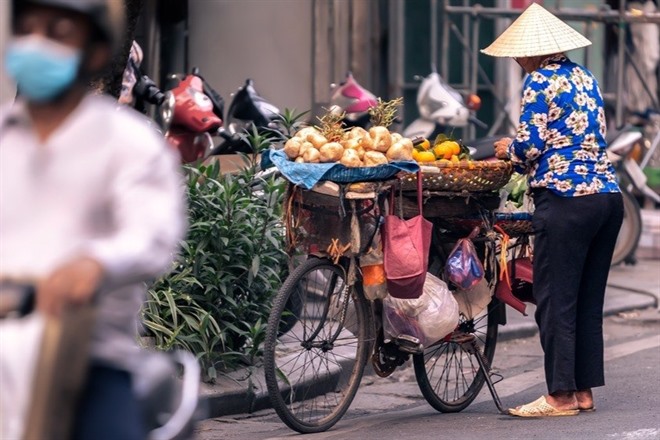
Upon arrival, you are met and transferred to your hotel. The rest of the day is yours to settle in at your own pace
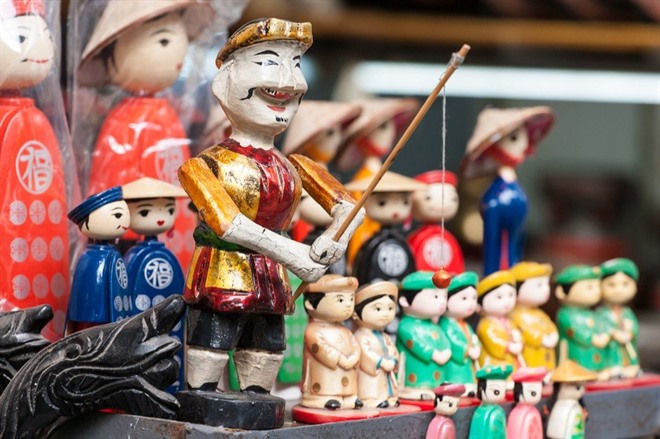
A full day exploring Hanoi with a guide. The morning takes in the Ho Chi Minh Complex, where the former president's stilt house has been preserved exactly as he left it in 1969, modest and deliberately so given his political convictions. Nearby, the One Pillar Pagoda is one of Vietnam's most recognisable structures, built in 1049 and designed to resemble a lotus flower rising from the water. The afternoon moves through the Temple of Literature, Vietnam's first university, and the lake-fringed streets of the Old Quarter, ending with a water puppet performance, a theatrical tradition unique to northern Vietnam that dates back to the 11th century. (B)
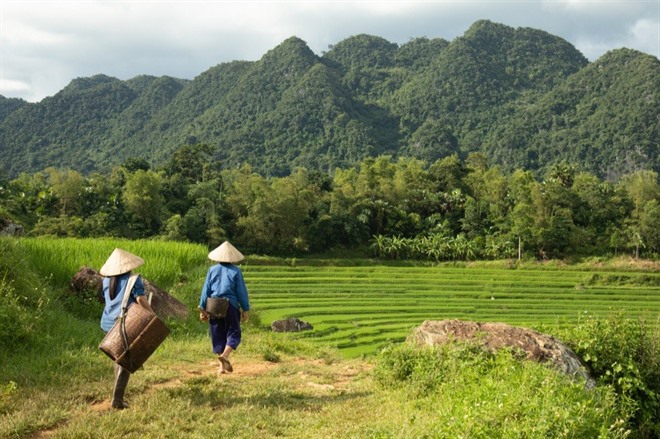
A scenic four-hour drive west from Hanoi brings you into the highlands of Pu Luong Nature Reserve. The landscape shifts gradually from flat delta farmland into limestone hills terraced with rice fields, interlaced with bamboo water wheels that have irrigated these valleys for generations. On arrival, you set out on a guided village walk with a local community guide, visiting working farmland and the stilted wooden homes of Thai and Muong ethnic minority families. It is an unhurried introduction to daily life in the reserve, where the rhythms of the agricultural calendar still shape everything. (B)
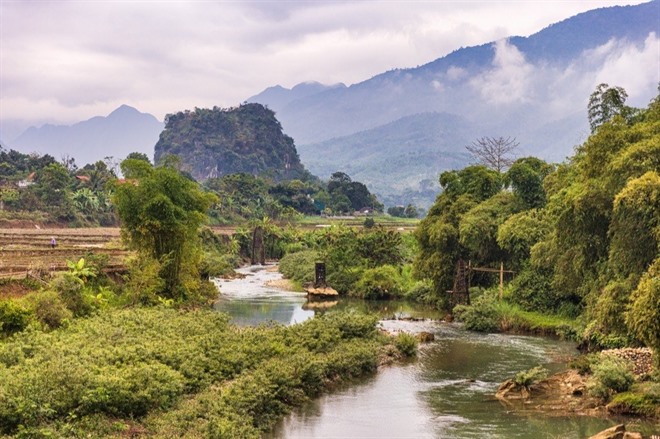
This morning's half-day route combines a four-kilometre trek with 40 minutes of cycling through the most celebrated valley in the reserve. The walk descends into the rice terraces facing the retreat, following narrow paths through dense vegetation before arriving at Uoi village, set at the base of a dramatic mountain. From there, you cycle through Lan village and along the paddy-lined tracks between them, with a stop at a local family home where you may catch a demonstration of traditional brocade weaving. The riding is easy and the scenery consistently rewarding. The afternoon is free for swimming, relaxing at the retreat or exploring further on foot.
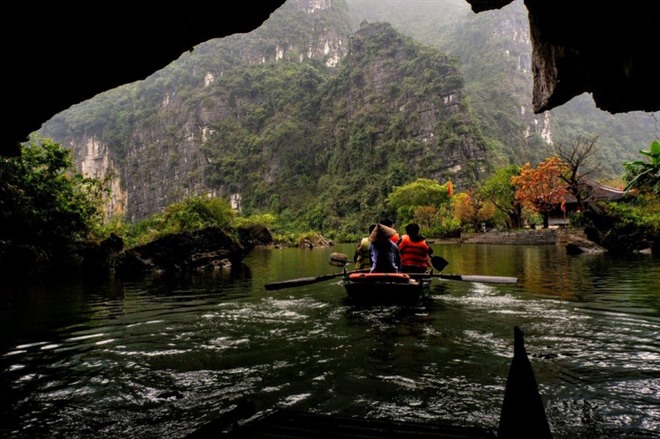
The drive east to Ninh Binh takes roughly three hours, the landscape opening up as the highlands give way to the Red River Delta. On arrival, join local farmers and fishermen for a hands-on afternoon: catching crabs and mudfish using traditional rattan tools, planting rice in the paddies and sitting down for lunch at a family restaurant with a cooking demonstration beforehand. Later, a rowing boat takes you into Galaxy Cave, discovered only in 2007 and still largely unvisited. Inside, stalactites and stalagmites fill both wet and dry chambers, the silence broken only by the sound of water. (B,L)
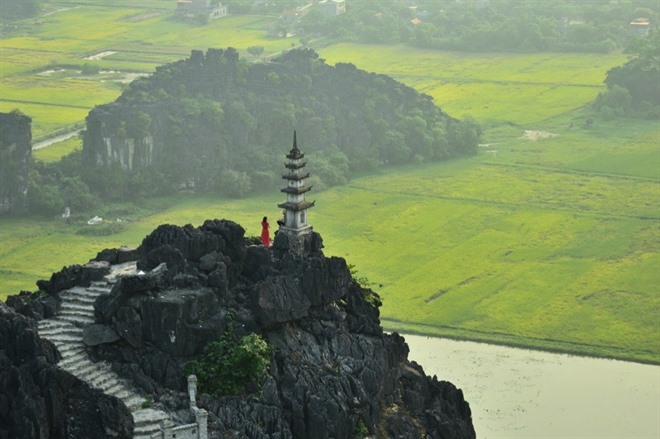
Ninh Binh is often called Halong Bay on land, and the comparison holds: limestone karsts rise sharply from flat paddy fields, their reflections caught in the rivers that wind between them. The day begins at Hoa Lu, the site of Vietnam's first independent capital in the 10th century, where two ancient temples mark the location of the royal citadel. A three-hour rowing boat journey along the Boi River follows, passing through the celebrated Tam Coc caves and past rice paddies framed by towering rock formations. The day ends with a 500-step climb to the Hang Mua viewpoint, where the panorama across the valley is among the finest in northern Vietnam. (B,L)
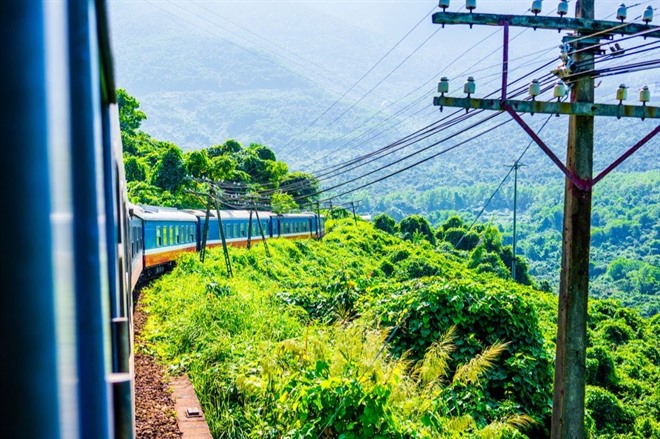
A free morning to explore Ninh Binh independently before transferring to the station to board an overnight train south. (B)
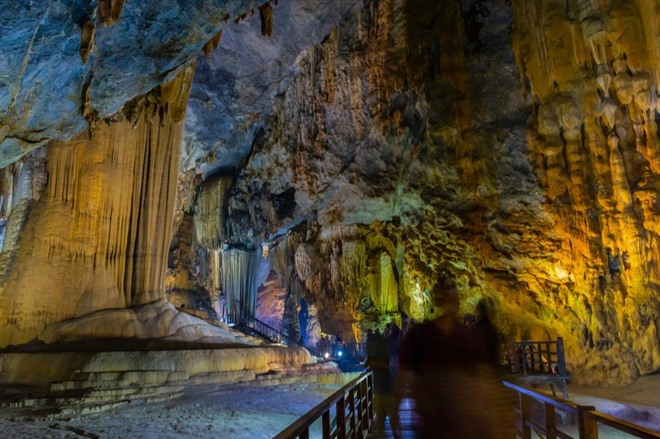
After arriving at Dong Hoi, transfer to your hotel to refresh. Later, a boat trip along the Son River brings you to the entrance of Phong Nha Cave, one of the oldest cave systems in Asia and a site of considerable historical weight: the cave formed part of the Ho Chi Minh Trail supply network during the American War and sheltered both troops and civilians under heavy bombing. Inside, the river continues underground through illuminated chambers of extraordinary scale. (B,L,D)
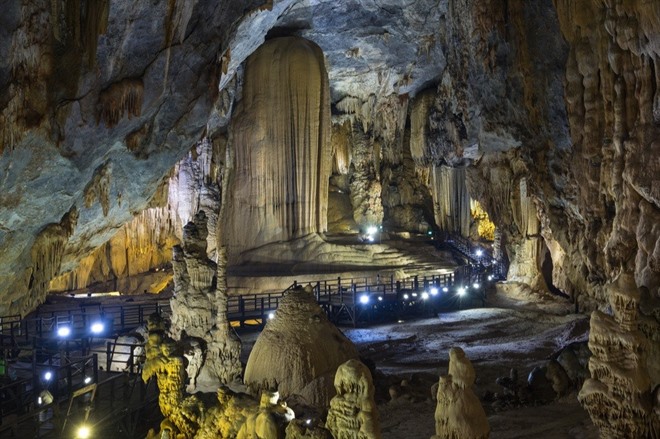
The two caves on today's itinerary could not be more different. Paradise Cave stretches 31 kilometres into the karst, its vast dry chambers filled with formations on a cathedral scale, considered among the most spectacular in Southeast Asia. Dark Cave is a far more physical proposition: you kayak the Chay River to the entrance, walk into the cave by torchlight and enter a subterranean chamber filled with thick, gloopy mud for a natural mud bath. Zip-lining, swimming and kayaking round out the afternoon. It is an extraordinary contrast to the grandeur of Paradise Cave and one of the most memorable days of the trip. (B,L,D)
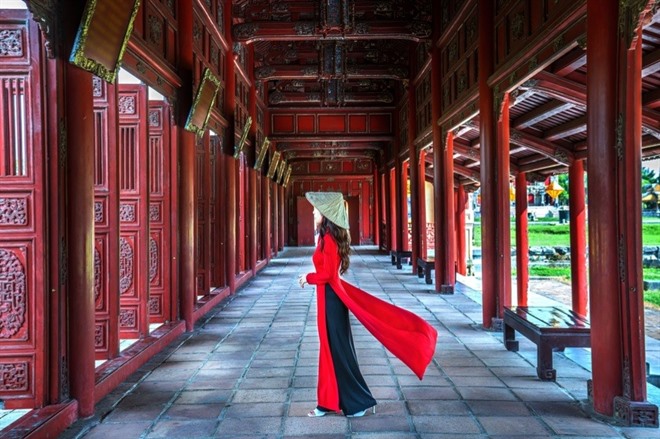
The drive from Phong Nha to Hue passes through the former Demilitarised Zone, the border that divided North and South Vietnam from 1954 until reunification in 1975. Two stops bring this history into sharp focus. The Hien Luong Bridge over the Ben Hai River was painted in two halves to represent the divided territories, a detail that carries considerable symbolic weight in person. At Vinh Moc, an entire coastal village went underground in response to sustained American bombing, carving nearly two kilometres of tunnels across three levels where families lived and worked for years. Hue is reached by late afternoon. (B,L)
Optional Rail Journey: The journey from Phong Nha to Hue can also be made by train, offering an alternative to the included road transfer. Please speak to one of our Travel Specialists if you would like to include the rail journey in your itinerary, as this will require revised pricing.
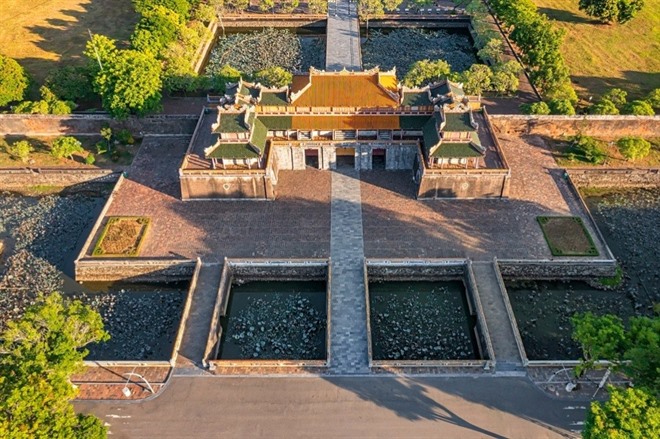
The morning begins with a boat trip along the Perfume River to Thien Mu Pagoda, an icon of the city whose seven-story tower has appeared in Vietnamese folk poetry for centuries. The Imperial Citadel, built in the early 19th century and modelled on Beijing's Forbidden City, dominates the afternoon, its surviving pavilions and ceremonial gates giving a vivid sense of the Nguyen Dynasty's ambitions despite significant bomb damage sustained during the American War. Two royal tombs close out the day: Minh Mang, considered the finest architectural ensemble of the dynasty, and Khai Dinh, whose lavishly decorated interior marks a deliberate departure from the classical style of earlier emperors. (B)
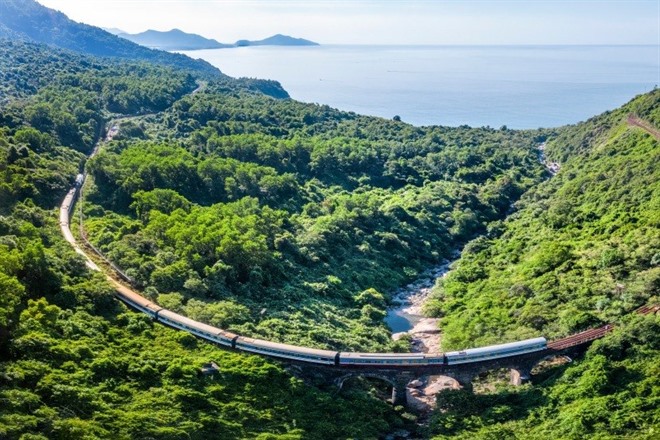
The train journey from Hue to Danang is one of the most scenic short rail routes in Vietnam, tracking the coastline over the Hai Van Pass with views across Lang Co Bay, Lap An Lagoon and the South China Sea. The journey takes around three hours. From Danang station, a transfer brings you to Hoi An, a UNESCO-listed merchant town whose Old Quarter has changed remarkably little since the 16th and 17th centuries, when it was one of the most active trading ports in Southeast Asia. The afternoon is free to explore at your own pace. (B)
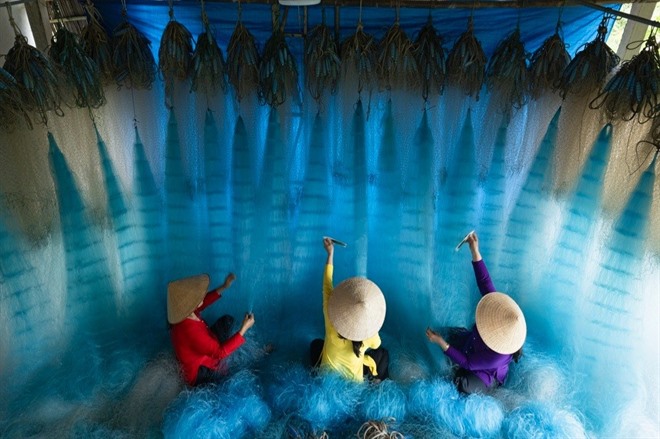
The morning takes you out of the Old Town entirely on a bicycle, following a route through rice fields and bamboo forests to Tra Nhieu, a riverside village known for its traditional boat-building and fishing culture. You watch fishermen practise ancient net techniques, visit a craftsman working with bamboo and share a home-cooked lunch with his family, including freshly made Mi Quang noodles. The afternoon walking tour of Hoi An's Old Quarter covers the highlights at a considered pace: a merchant family home occupied by the same family for centuries, an ancestral chapel, a Chinese assembly hall and the Japanese Covered Bridge, first built in 1593. (B,L)
Pricing Information
Price Includes
- Return international flights on Vietnam Airlines
- All taxes and charges
- Accommodation and meals as specified
- Transfers as specified
- Activities and excursions as specified
- All entrance fees on sightseeing tours as specified
Price Includes
Price Excludes
- Travel Insurance
- Any meals not specified in the itinerary
- Tips and gratuities
- Optional excursions
Price Notes
- Price is per person based on 2 adults travelling together with a 2 May 2027 departure
- All flight rates are correct at the time of publication but remain subject to change by the airlines. The exact airfare and any applicable taxes or surcharges will be reconfirmed at the time of booking.
- Holiday and peak season surcharges are not included in the above prices. Additional charges may apply during peak travel periods, including 15 December to 10 January and the Vietnamese New Year period, and will be confirmed at the time of booking.
- This itinerary is valid for travel between April and August.
- This is a suggested itinerary that can be customised to suit your preferences. We can remove certain excursions or add other destinations as needed. This provides an overview of what you can experience in the area, but it is by no means exhaustive. Please reach out to one of our travel specialists to help you create your ideal holiday.
Tour Route Map
- Vietnam, Hanoi
- Vietnam, Ninh Binh
- Vietnam, Pu Luong
- Vietnam, Phong Nha
- Vietnam, Hue
- Vietnam, Hoi An
Tour Accommodation

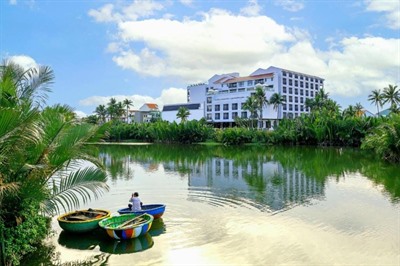
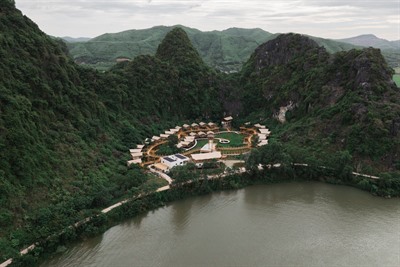
Image Gallery