Traditional Craft Workshops To Do in Japan
Traditional Craft Workshops To Do in Japan
Having travelled across the country numerous times, our Senior Product Executive, Noemi, has experienced so much in Japan, from its vibrant cities and historic temples to its lesser-known rural communities.
Yet with every visit, she uncovers something new: a hidden workshop, a family-run studio, or a centuries-old craft that offers a deeper connection to the country's culture. It's these authentic encounters with local artisans that continue to draw her back, revealing a side of Japan that many travellers never get to experience.
For Noemi, it's these hands-on experiences that have come to define her travels in Japan.
.jpg)
"There are ways to travel that leave you having seen a place, and then there are ways to travel that leave you having touched, worked with, and learnt from it. For me, it's these moments that define Japan. Craft isn't simply decoration; it's part of the country's identity, woven into everyday life and passed down through generations. When you step into a workshop or studio, you're stepping into someone's story, learning not only how something is made, but why these traditions continue to matter today."
Noemi Espinosa
Senior Product Executive
Why Try a Traditional Craft Workshop in Japan?
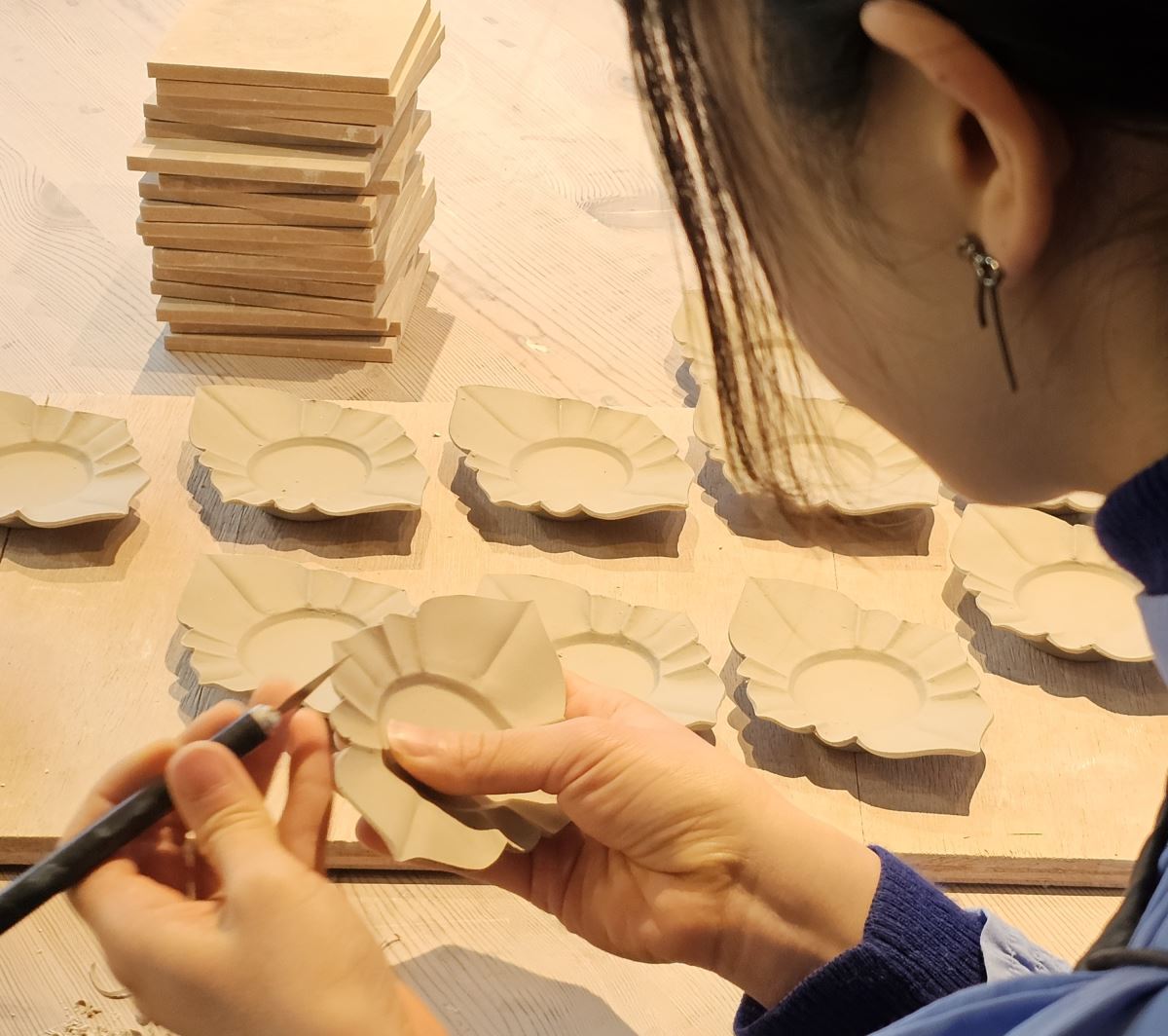 Traditional pottery workshop in Japan
"Joining a traditional craft workshop is one of the most rewarding ways to experience Japanese culture. Instead of simply observing from the outside, you'll work alongside local artisans, learning the techniques, stories and customs behind some of Japan's most celebrated crafts.
Whether you're repairing pottery through kintsugi, painting Hakata dolls, dyeing fabric with natural indigo or carving your own chopsticks, each workshop offers a hands-on insight into the people and places that keep these traditions alive.
If you're looking for unique things to do in Japan, these experiences combine culture, creativity and authentic local connections, leaving you with memories that last long after your trip has ended."
Along with the best festivals to go to in Japan, discover some of the best traditional activities you can immerse yourself in during your visit.
Kintsugi Workshop in Tokyo
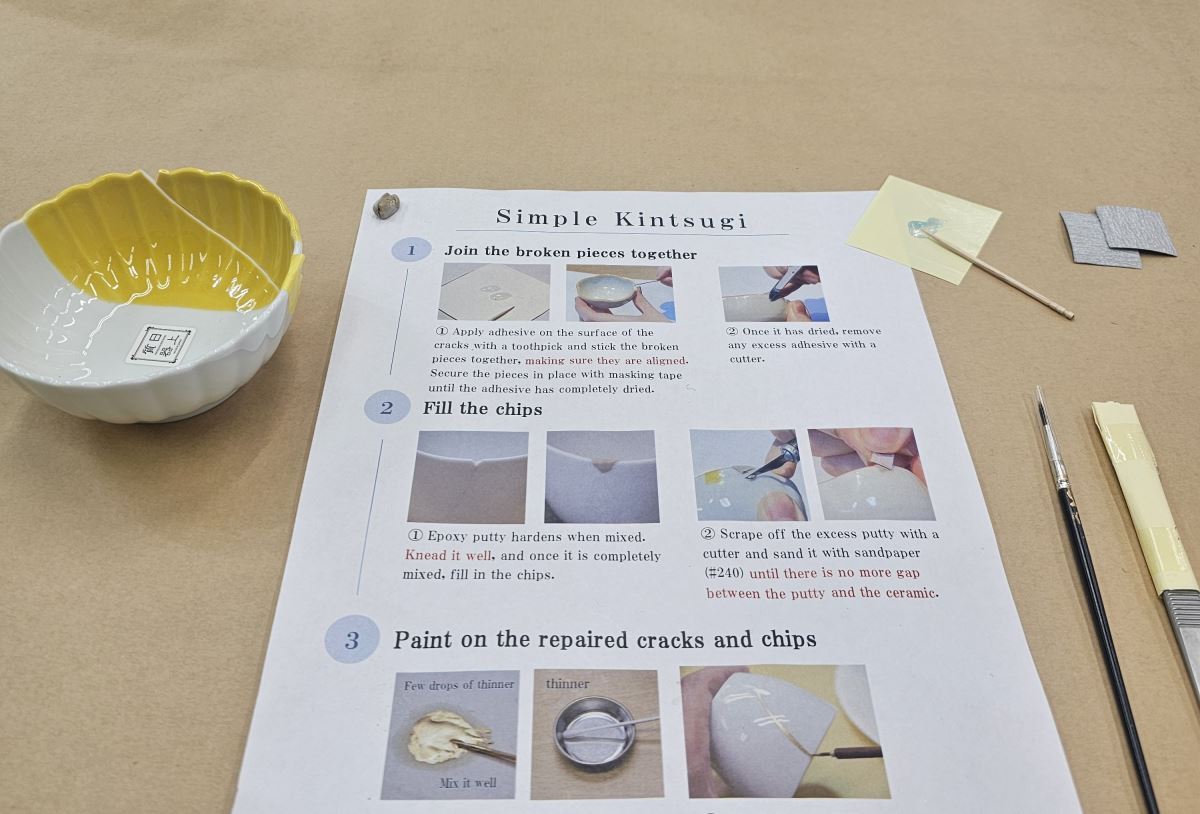 Kintsugi workshop
"In a small Tokyo workshop, broken ceramics are carefully pieced back together with lacquer and gold. Kintsugi has roots stretching back to the 15th century, when cracked tea bowls were restored and celebrated rather than discarded.
The technique dates back to the 15th century, when tea bowls were restored instead of thrown away. Each shimmering line tells of use, age, and resilience. It’s wabi-sabi in practice: imperfection isn’t shameful, it’s meaningful and part of the story of the ceramic you’re holding."
Experience this authentic workshop on our 'A Week in Tokyo: Beyond the Stopover' tour.
Painting Hakata Dolls in Fukuoka
.jpg) Hakata doll painting
Hakata doll painting
"In Fukuoka, the tradition of Hakata ningyō dates back to the 17th century, when potters began making clay figures for the local Kuroda clan. These dolls are shaped from fine white clay, biscuit-fired without glaze and hand-painted with remarkable detail.
At a painting workshop, every brushstroke becomes an exercise in patience and concentration, from painting expressive eyes to the delicate patterns on a kimono.
Hakata dolls gained international recognition at the Paris Exposition in 1900, and in 1976 they were officially recognised as one of Japan's Traditional Crafts. Today, around 100 artisans continue this centuries-old practice in the Fukuoka area."
Designed for you to get to know the heritage as much as the local delicacies, our 'Culture & Cuisine of Japan' offers the opportunity to enjoy the ancient tradition of doll painting.
Tanaka Kasuri Indigo Dyeing in Chikugo
.jpg) Fabric dyeing in Chikugo
Fabric dyeing in Chikugo
"Just outside Kurume in southern Fukuoka Prefecture, the indigo vats at Tanaka Kasuri Kobo introduce visitors to one of Japan's oldest textile traditions.
Kurume Kasuri has been woven here for more than 200 years using pre-dyed threads that form intricate patterns when woven together. During the workshop, you fold fabric, immerse it in deep indigo dye, and watch it transform from green to rich blue as oxygen reaches the surface.
Under the guidance of Mamiko Tanaka, whose family lineage stretches back to the late Edo period, visitors experience a process that has remained largely unchanged for generations. The workshop is as much about conversation with the artisan as it is about creating your own piece of dyed fabric."
Whilst in Fukuoka Prefecture on our 'Kyushu's Hidden Treasures' tour, you can make your own dyed fabric at Tanaka Kasuri Indigo Dyeing in Chikugo.
Make Your Own Chopsticks at Hashiya Ichizen
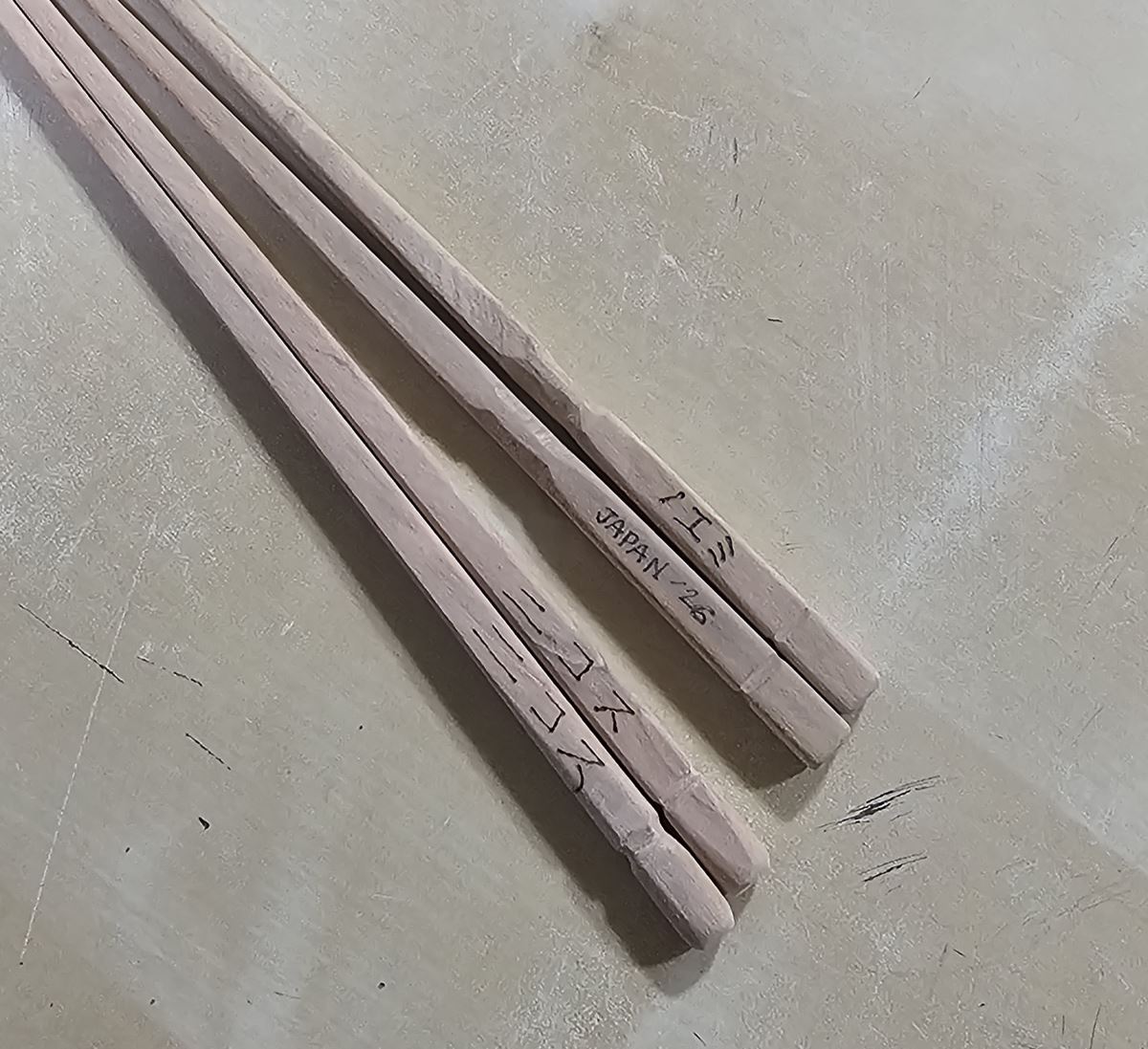 Chopstick making at Hashiya Ichizen
"In Oita, local forests provide the timber used to create handcrafted chopsticks. At Hashiya Ichizen, wood sourced from Yufuin and other parts of Kyushu is selected for its durability, sustainability and distinctive grain.
Visitors carve, sand and shape their own chopsticks under the guidance of experienced craftspeople, learning how subtle differences in weight, balance and wood grain influence the finished piece.
The workshop also highlights sustainable forestry by using wood from thinning projects, ensuring traditional craftsmanship supports responsible environmental management."
Uncover some more of the top cultural experiences that Noemi recommends in Japan with our 'Best Cultural Experiences in Japan: Traditions, Activities & Tours' guide.
Wear a Traditional Kimono
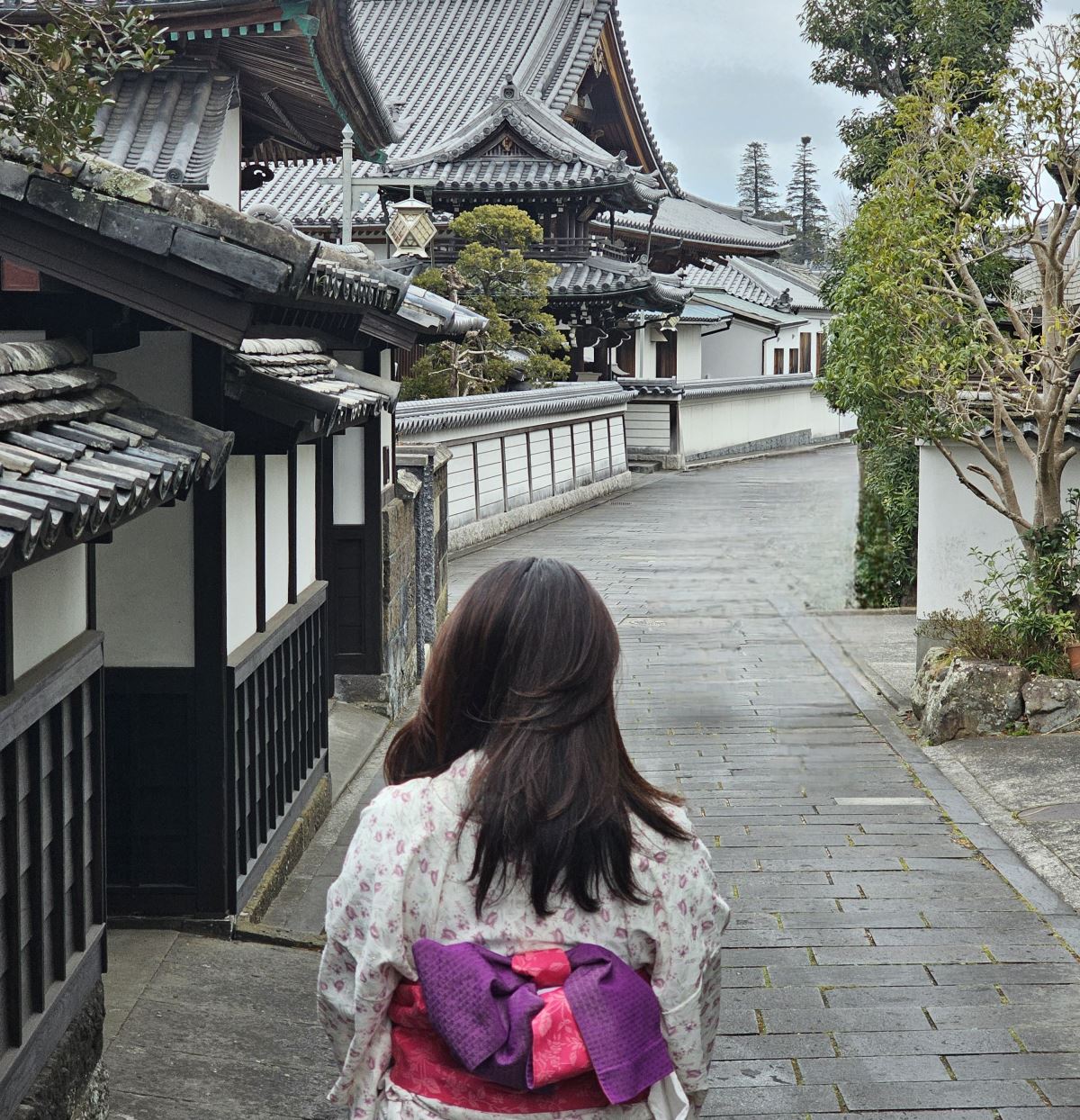 Noemi wearing a traditional kimono
"A kimono experience offers far more than simply dressing up for photographs. Many kimonos are treasured family heirlooms, with hand-painted silks and intricate craftsmanship that make them valuable works of art.
Every detail carries meaning, from seasonal motifs and sleeve length to the way the obi is tied. During a dressing experience, local experts explain the symbolism behind each layer, how styles change with the seasons and how the garment reflects the wearer's age and occasion.
Rather than wearing a costume, visitors gain an understanding of a living tradition that continues to be practised throughout Japan."
On the Explore Ancient Japan tour, this connection to tradition continues with the chance to experience wearing a kimono for yourself, an opportunity to step beyond simply observing Japanese culture and become part of it.
More Than a Souvenir
%20(1).jpg) Traditional doll painting
Traditional doll painting
"These workshops and interactions are not just activities to tick off an itinerary. They are openings into worlds that have not only survived modernity but continue because they still matter to the people who live in them. In these studios and workshops, these skills are communal knowledge, shared not through demonstration videos but by artisans willing to pass on what they learned from those before them.
To leave Japan having made something – to lift a bowl you repaired, a cloth you dyed, chopsticks you carved, or a kimono you learnt to wear – is to take home a piece of tradition that is both personal and ancient. In the end, what stays with you is not the object itself, but the memory of how it came into being and the people who helped you shape it."
Ready to Discover Japan Through Traditional Craft?
The best way to experience Japan isn't just by seeing its landmarks; it's by meeting the people who keep its traditions alive. From repairing pottery with kintsugi to dyeing fabric with natural indigo and learning from master artisans, these hands-on experiences offer a unique connection to Japan's culture, heritage, and way of life.
Talk to our Travel Specialists today to start planning your tailor-made journey and discover the traditional craft workshops that will make your trip to Japan truly memorable.
Start planning your holiday today
Looking for more inspiration?
Our blog has plenty of insightful guides on Japan to help you plan your holiday. See more below:
Best Time to Travel Asia by Season