Things to Do in Transylvania - That Aren't About Dracula!
Things to Do in Transylvania - That Aren't About Dracula!
Mysterious, misunderstood and impossibly beautiful, Transylvania is a destination that rewards those willing to look beyond the legend.
On a journey curated by our Specialists here at Regent, award-winning author and travel journalist Felicity Cloake sets out to discover the region’s true character, from fortified Saxon villages and forested mountain valleys to generous tables laden with centuries-old recipes.
Forget the myths: Felicity is here to reveal the real magic of Transylvania, and she can’t wait to share it with you.
(5).jpg)
"Transylvania is far more than Dracula and dark legends. On a journey through fortified churches, mountain villages and food rooted in centuries of tradition, I discovered a region defined not by myth, but by warmth, wild beauty and unforgettable hospitality. This is the real magic of Transylvania - and it has nothing to do with vampires."
Felicity Cloake
Beyond Dracula: Separating Myth from Transylvania’s Reality
.jpeg) Brașov from above
Brașov from above
"In many ways, Dracula’s Castle is the least interesting thing about Transylvania.
Don’t get me wrong, this medieval fortress towering over the Romanian village of Bran is impressive – indeed, it attracts almost three quarters of a million visitors a year – but as my guide Claudia Falutoiu informs me, it has absolutely no connection with Bram Stoker’s inspiration, the Wallachian prince known to history as Vlad the Impaler.
The building that claims to be his birthplace in the beautiful walled city of Sighisoara has a similar problem; 'very strange,' she laughs when we stroll around its winding cobbled streets the following evening, 'because this house is from the 16th century, and Vlad was born in 1431.'"
Following a local’s lead into the heart of the region
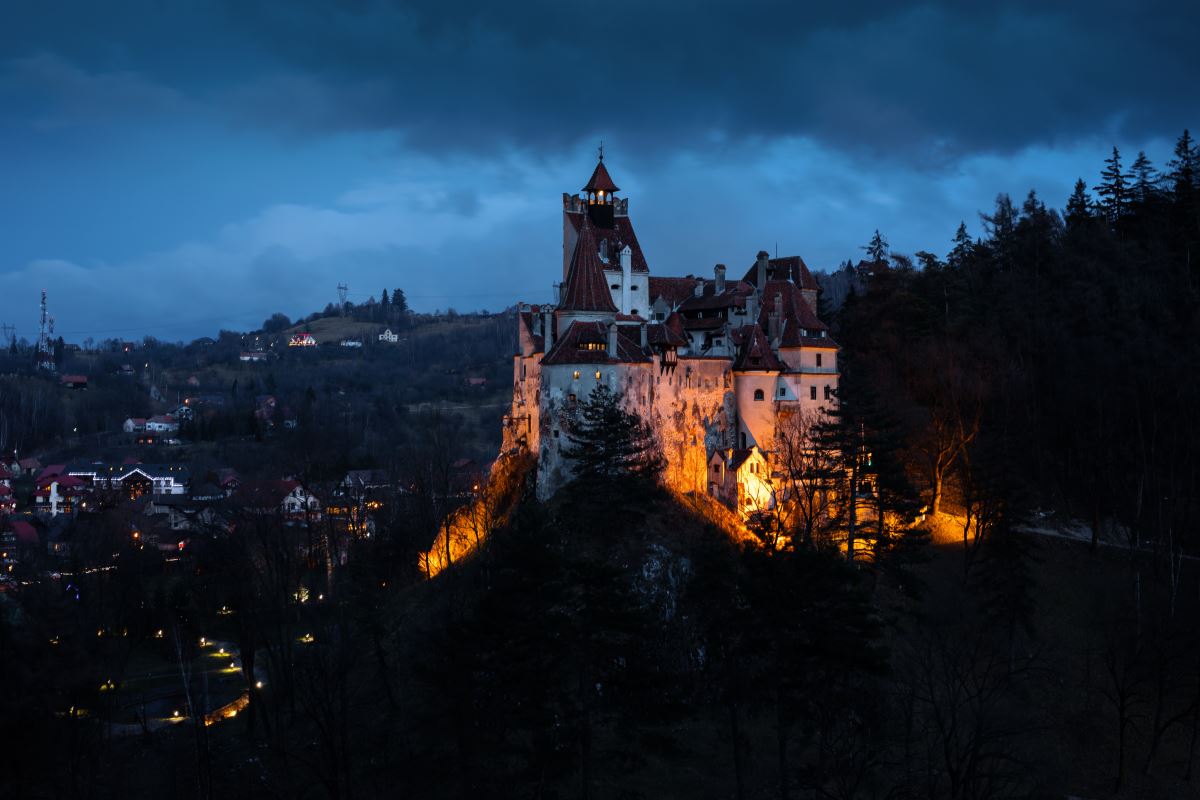 Bran castle
"Budapest-born Claudia fell in love with this stunning, sparsely populated region on a visit a decade ago and never left; it’s that kind of place.
On my three-day tour, she’s keen to show me the real Transylvania, rather than the myth created by a 19th-century Irish novelist who never set foot there – if I was hoping for swirling mists and sinister goings on in the night, I’m to be disappointed (though Castelau Bran does have a wince-inducing display of torture instruments, should that be your area of interest).
Rather than “silent and ghostly” bats, the recurring motif turns out to be the huge white stork, bringer of life, who I see sitting peaceably atop telegraph poles and church towers in city and countryside alike, and once, magically, wheeling in a sail-like flock through a remote valley."
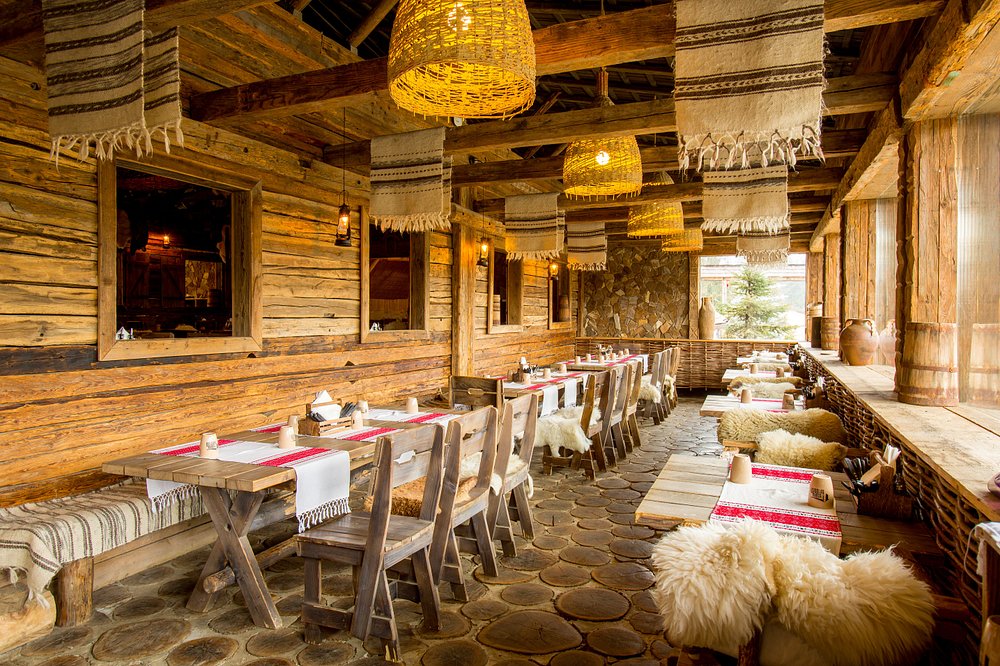 Stana Turistica
"We start in Bran, just 16 miles from the shiny new Brașov Airport, I suspect to get the Dracula nonsense out the way first, though it’s just a brief stop this time – Claudia promises to bring me back to the castle early the next morning to beat the queues. Leaving the crowds behind for now, we rattle up a dusty unmade road to the rough-hewn, wood-beamed Stana Turistica, which claims to serve up recipes 'from old sheepfolds or found by shepherds in their wanderings'.
Rustic, yes, but stylishly so; the terrace looks across the valley to the verdant slopes of Poiana Brașov, the “largest and most luxurious ski resort” in the country, and the food, while undoubtedly hearty, is carefully presented: a tangy beef ciorbǎ (a meal is not a meal in Romania unless it starts with soup, I learn) followed by grilled homemade sausages, plump mounds of yellow polenta cooked in ewe’s milk, and stuffed cabbage rolls."
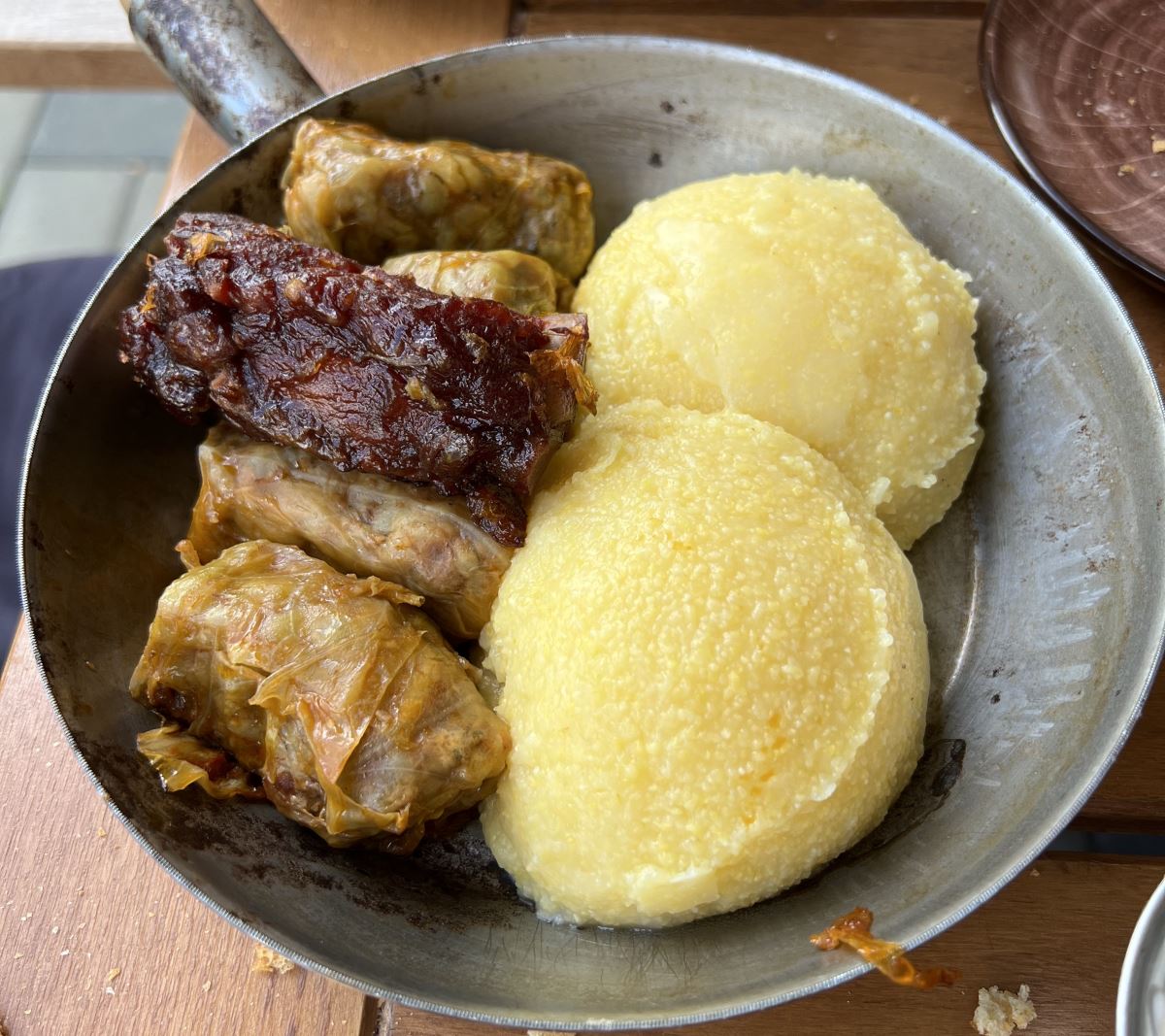 Ewe's milk polenta and stuffed cabbage
"As we head back down into the forest, I’m already wondering where I can go for a Transylvanian in London."
From trade routes to tabletops: discovering Brașov
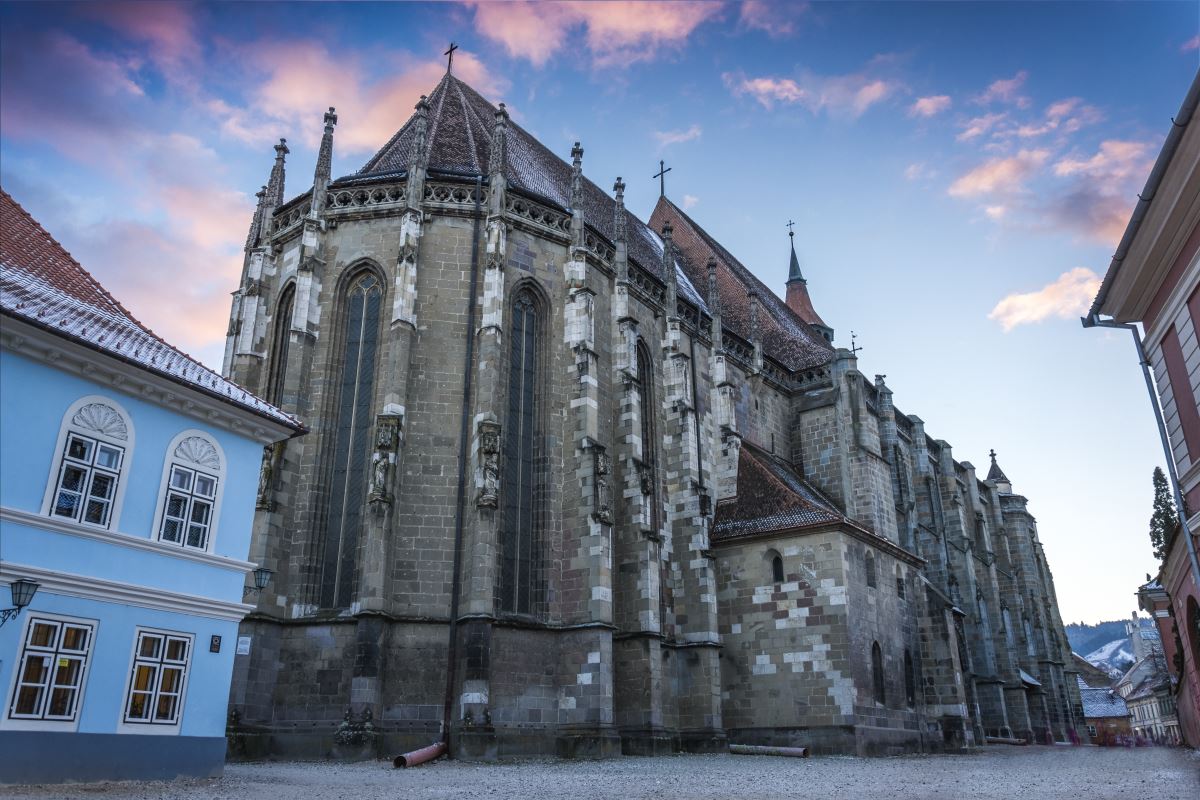 Black Church, Brașov
"This proves ample fuel for exploring the defensive citadel and modern city of Brașov that afternoon, built on the wealth that came with its position on the main trade route between the Ottoman Empire and Western Europe, a dual identity neatly captured by the Black Church, the largest Gothic structure east of Vienna, and home to a remarkable number of Anatolian prayer mats.
The handsome market square outside may be the site of the last witch burning in Europe, but in the 21st century, its inhabitants prefer to concentrate on vegetables; the air, as we hike up to a waterfall on the edge of town, is heavy with the scent of families grilling huge quantities of aubergines on public barbecues, which they will jar to see them through the winter, Claudia explains."
Villages, faith and food
 Roma Village
"Usually a fiercely independent traveller who prefers to wander where the wind (or more usually my appetite) takes me, I find myself greedy for such local detail, things I never would have found, let alone understood on my own.
We hike up to the ancient, austerely beautiful cave church at the Sinca Veche Monastery (just a dusty carpark from the main road), where we both buy bottles of holy water for our mothers, chat over tea and plum brandy with a family of copper workers in a Roma village (where I’m persuaded into trying on a colourful, many layered skirt belonging to our hostess, to the delight of assorted toddlers) and, best of all as far as I’m concerned, bake bread in a 15th-century wood-fired oven before sitting down to eat it with cheese, charcuterie and astonishingly fruity tomatoes from the chef’s garden.
After lunch, I’m encouraged to go and admire the 14th-century wall paintings in the Saxon church and perhaps pick a few wild plums for pudding while I’m at it. Travelling with Claudia feels like getting an access-all-areas pass to this rich and culturally diverse region on the border between Mitteleuropa and the Balkans."
Hidden villages, bears and untamed beauty
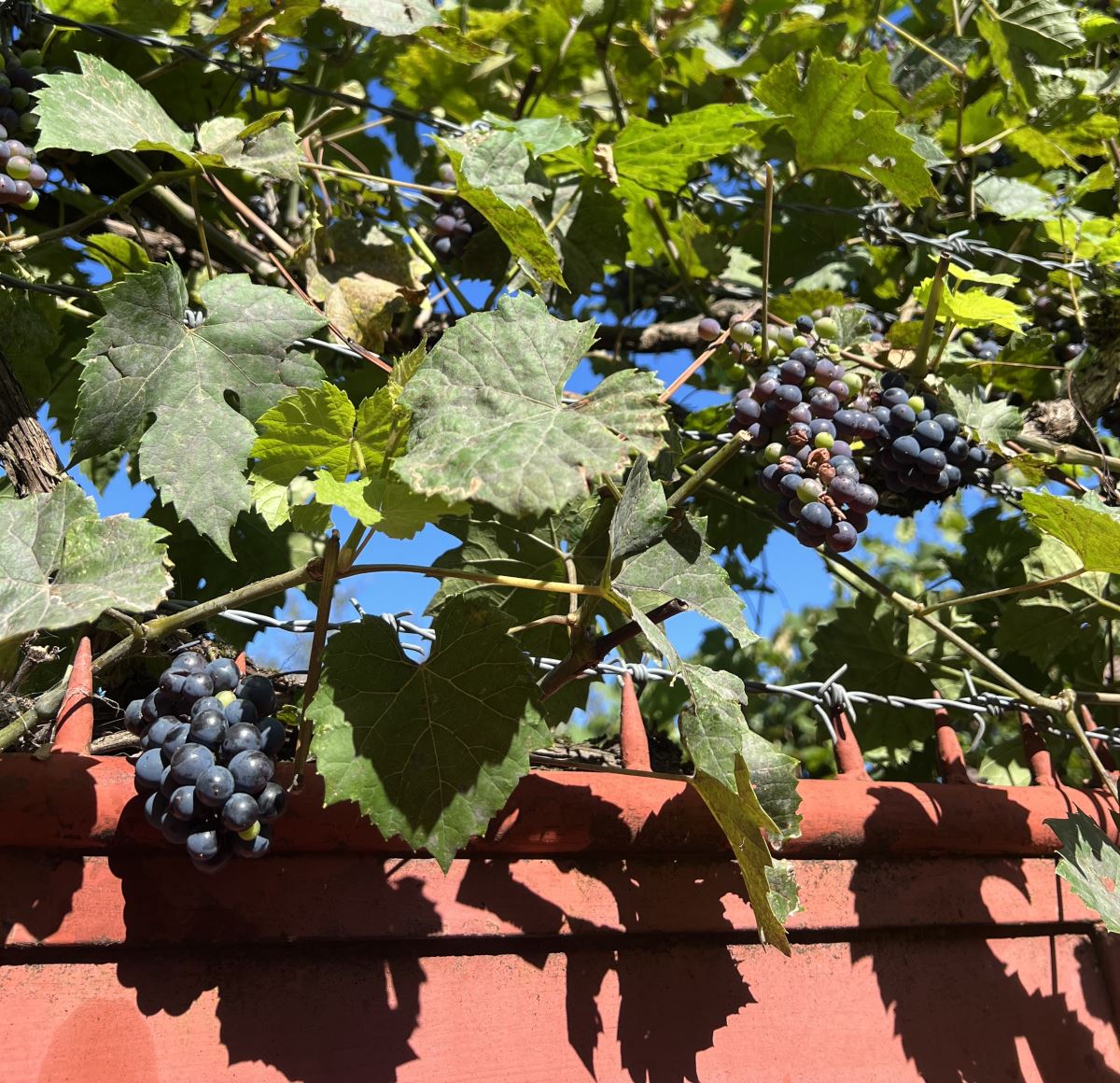 Grapes growing in the village of Viscri
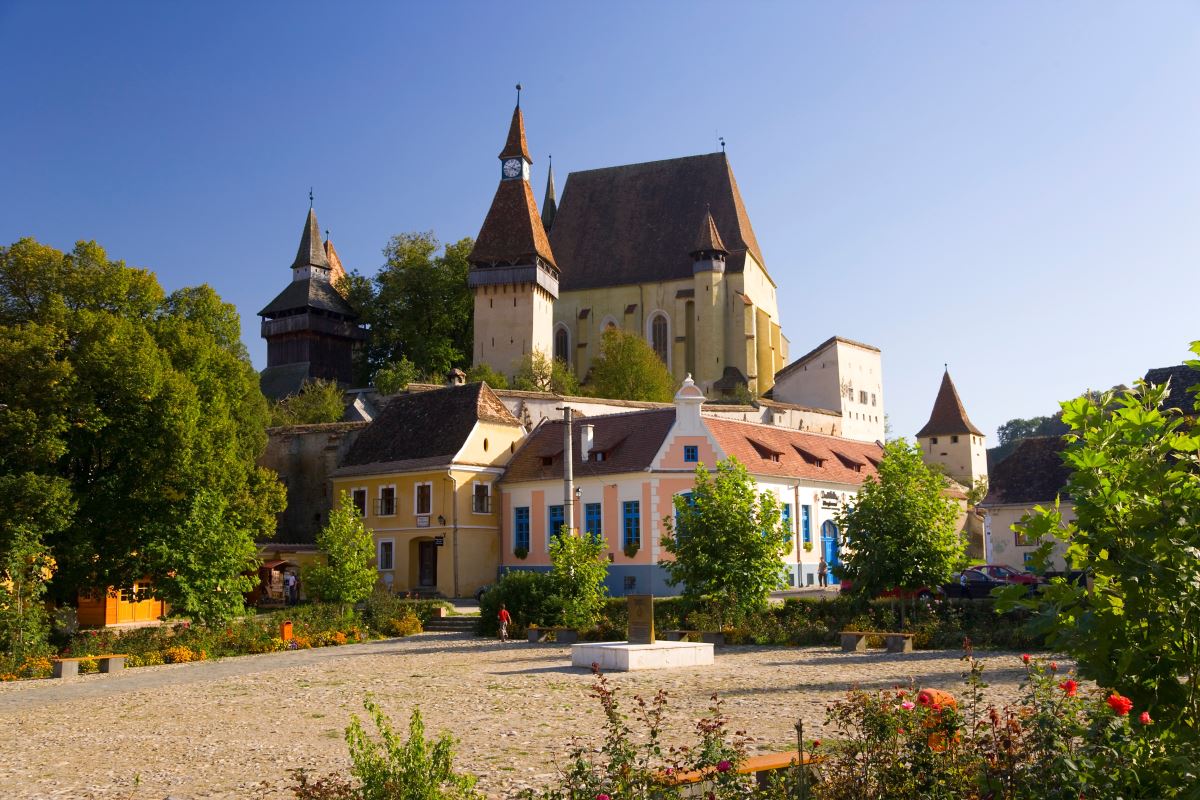
"Vampires schampires – it’s these experiences that are, for me, the true magic of Transylvania, an appeal not lost on one King Charles III, who was so enchanted by the unspoiled beauty of the place on his first visit a quarter of a century ago that he bought a house in the pretty village of Viscri, now run as a visitor centre and guesthouse (His Majesty, who claims Vlad as a relative, prefers to spend time in a second property 50 miles to the east in the more secluded settlement of Valea Zalanului)."
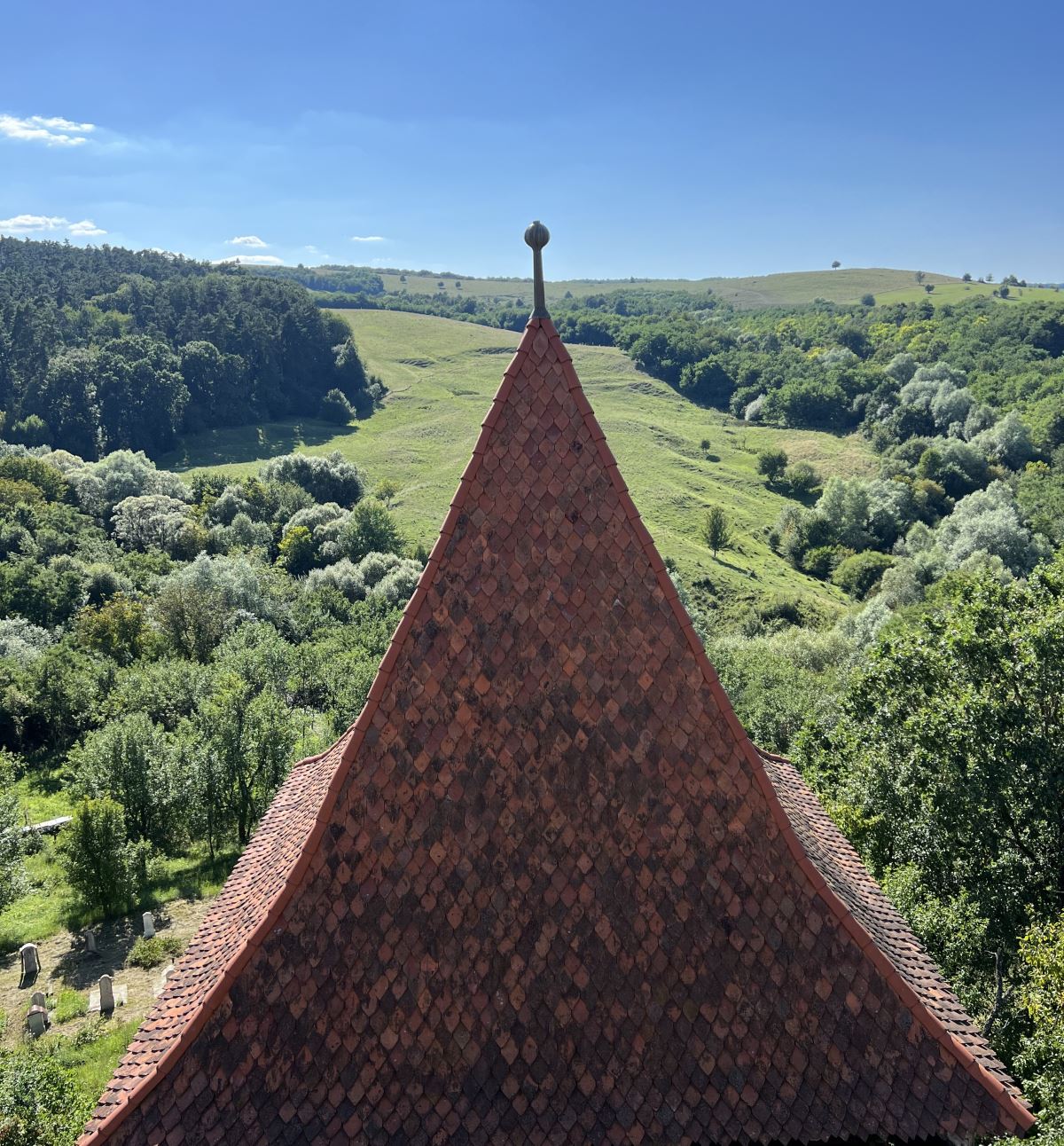 View from the fortified church of Viscri
"Though firmly on the tourist trail these days, it’s still worth a visit, if only for the fascinating fortified church, where I was particularly taken with the local tradition of “lard towers”, in which each family would store its ham and fat for the year before the advent of widespread refrigeration in the early 1990s. That said, a similar rural charm, with cows grazing in the streets and vegetable gardens groaning with produce, can be found in any number of less famous and more tranquil communities nearby."
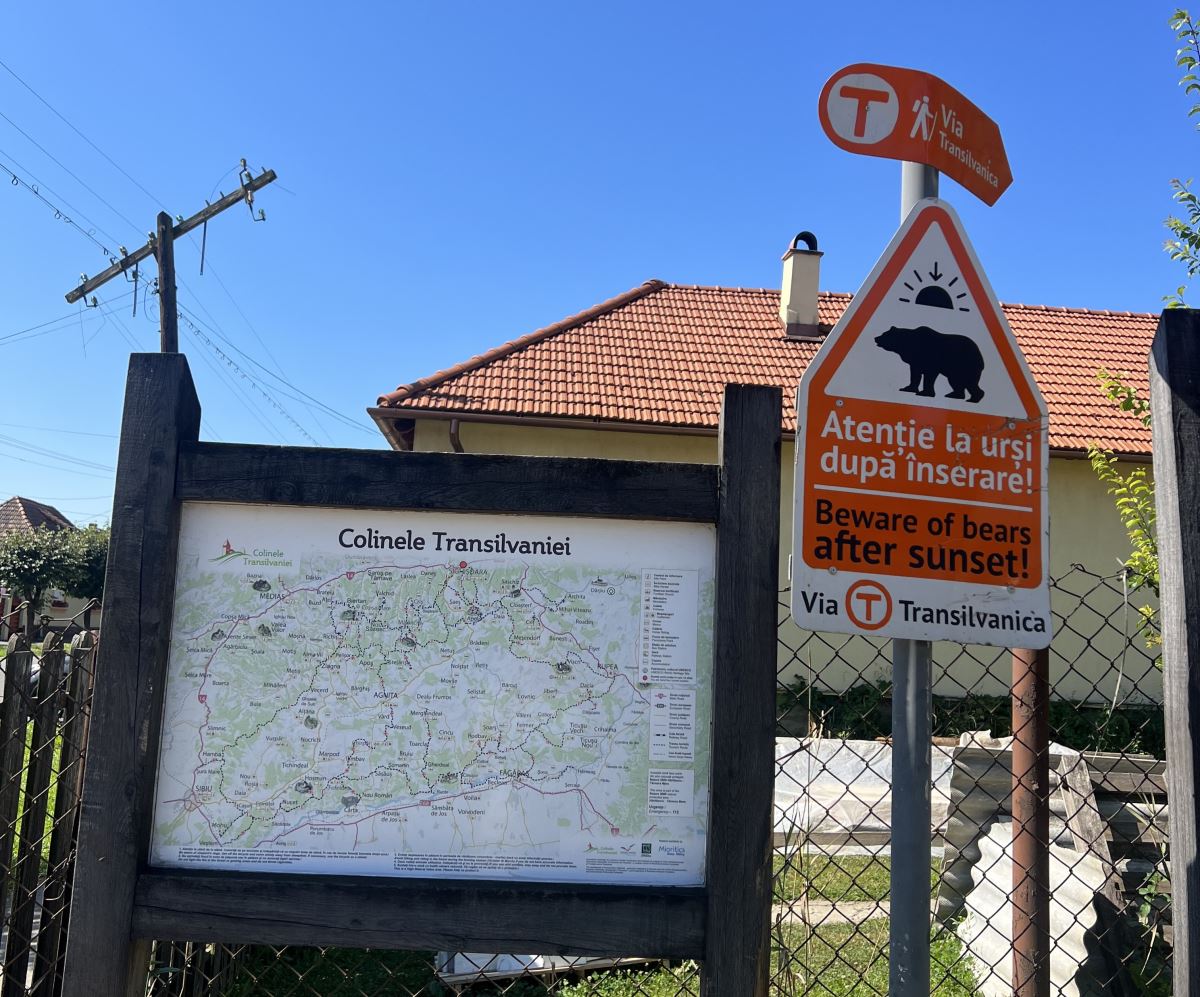 'Beware of the bears!' sign
"In fact, perhaps the only thing I have in common with HRH is that it was love at first sight for me too, even before spotting (while desperately trying to walk off a typically generous hotel breakfast) a sign by the path up to the woods warning hikers to “beware of bears after sunset!”. When she picks me up a little later, Claudia confirms that this wild, mountainous landscape is home to the largest brown bear population in Europe… and just like that, I’m already planning my return."
Are you inspired by Felicity's adventure to Transylvania?
We offer a range of tailor-made tours through this enchanting region, from charming Saxon villages and fortified churches to mountain valleys and local culinary experiences. Whether you crave culture, history, or authentic rural life, we can create the perfect Transylvanian journey just for you.
Culture & Cuisine of Transylvania