The most impressive Silk Road cities still standing
The most impressive Silk Road cities still standing
Stretching from China to the Mediterranean, the Silk Road connected the great civilisations of East and West for over two millennia. The network of trade routes provided wealth and prosperity that allowed the settlements on its passage to thrive.
Along with plenty of spices, furs, silk and jade, ideas and cultures were also traded along the Silk Road, making it one of the most unique and fascinating routes to travel. A true cultural and historic marvel.
We’ve compiled a list of some of the most impressive cities along the Old Silk Road that are still standing today.
1. Khiva
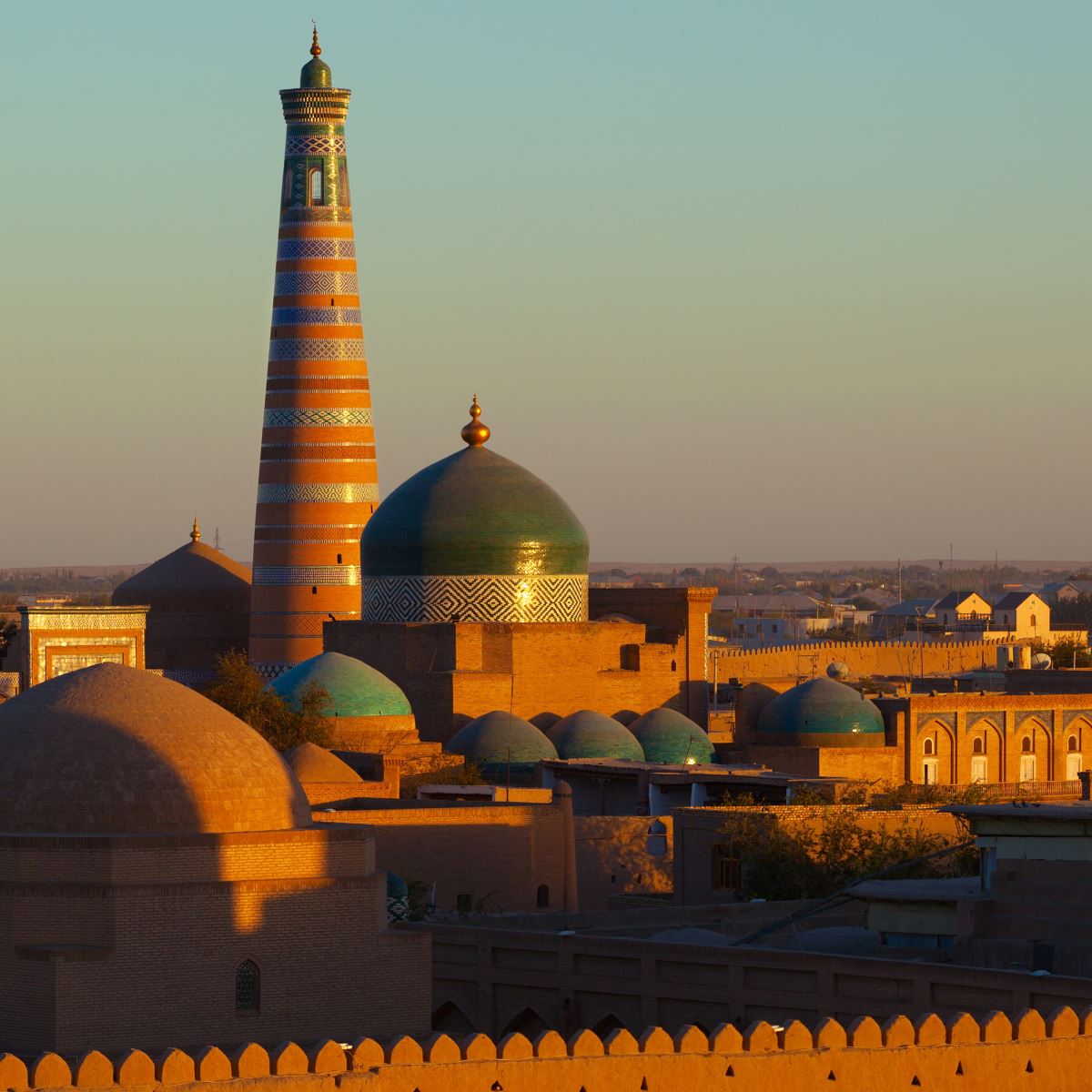 Khiva, Uzbekistan
You may struggle to imagine Khiva’s brutal past as a major slave trade post as you wander between the ornate mosques, madrassahs and tiled minarets within Ichon Qala (the walled inner city).
Once a key stop along the Silk Road and capital of the Khanate of Khiva, its remarkably preserved old town now feels more like an open-air museum than a former centre of power. Recognised as a UNESCO World Heritage Site, it remains an important cultural and religious hub, with landmarks such as the Kalta Minor Minaret and Tash Hauli Palace offering insight into its layered history.
No trip to Khiva is complete without time spent exploring its street stalls, where locals trade spices and dried fruits alongside vibrant textiles, scarves, rugs and traditional crafts - offering a glimpse into everyday life in this historic desert city.
2. Bukhara
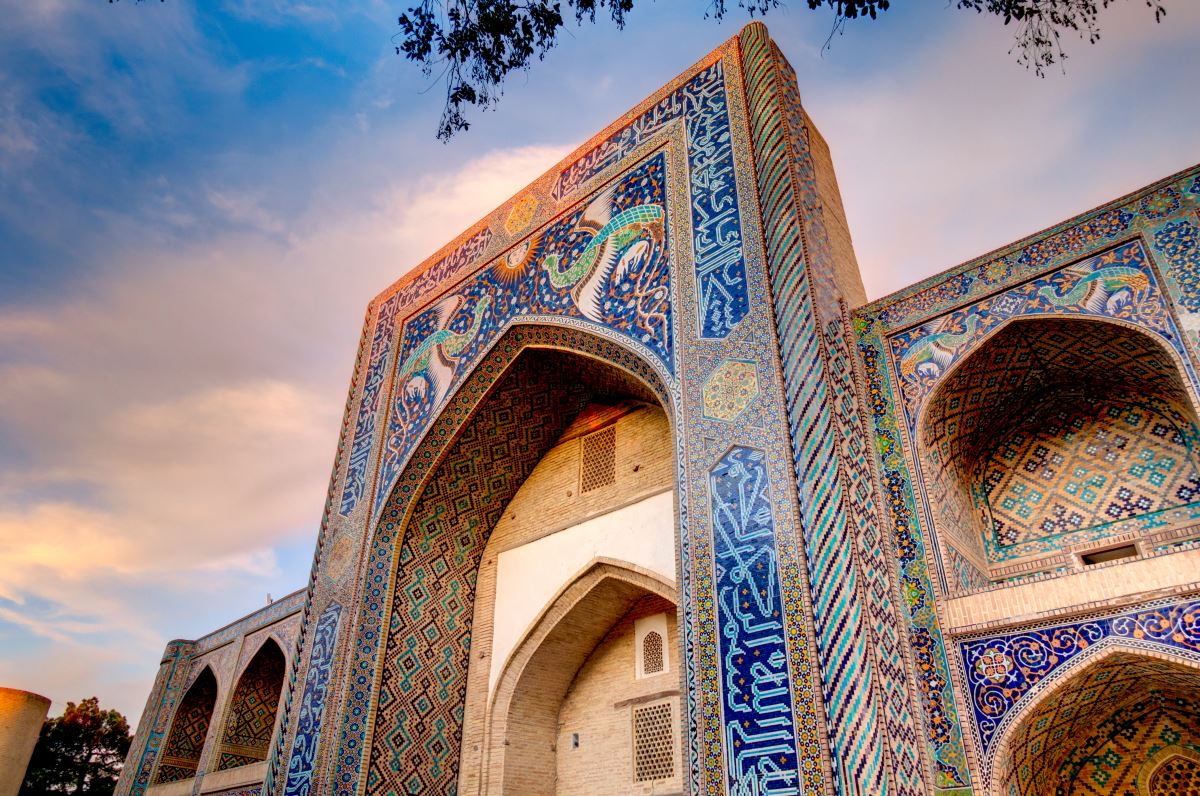 Divan Begi Madrasah, Bukhara
At 2,000 years old, Bukhara is the most complete example of a medieval city in Central Asia. Generously populated with mosques, madrassahs and minarets, the city is also home to the famous tomb of Ismail Samani, which is a masterpiece of 10th-century Muslim architecture.
Bukhara has historically been a key intellectual centre of the Islamic world and an important area for trade, culture, religion and scholarship. Today, it is a beautifully preserved, ancient, enchanted city and one of the best places to view the region pre-Russian influence. Lose yourself for a few days in its atmospheric old town.
3. Samarkand
.jpg) Samarkand, Uzbekistan
Samarkand, Uzbekistan
Delve into one of the oldest continually inhabited cities in Central Asia as you explore the patterned passages of Samarkand. Considered a crossroads of the world’s cultures, the city has a history spanning over two and a half millennia. The ornate, blue-tiled buildings of Registan Square, the old centre of the city, will transport you back to the Timurid dynasty from when it was first constructed.
The influence of these buildings stretches far, with a reflection of the architecture appearing in Iran, India and Russia. According to legend, the Shah-i-Zinda necropolis is the burial place of Kusam ibn Abbas, cousin of the Prophet Muhammad.
4. Konye Urgench, Turkmenistan
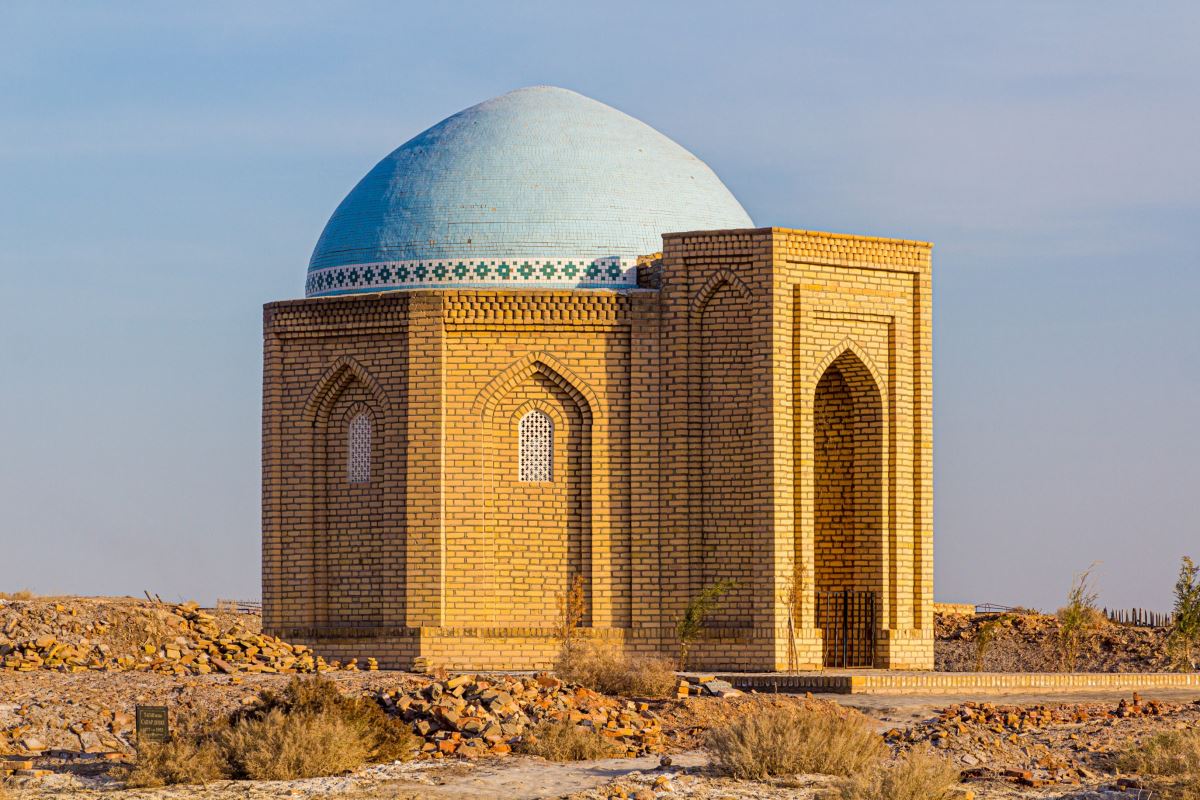 Konye Urgench, Turkmenistan
This city earns its place on the ‘most impressive’ list not because of a multitude of grand and ornate buildings, but because of its history and resilience. The exact dates of when this city was founded are uncertain, but it came into its prime between the 10th and 14th centuries when its strategic location made it an excellent Silk Road trading centre.
The city became a centre-ground for many battles between Khwarezm ruler Yusef Sufi and Timur of the Timurid Empire, ending in Timur destroying much of the area. Today, only a few monuments remain but they are authentic and beautiful examples of traditional architecture.
- Discover some of our in-depth Turkmenistan tours that delve deep into the extraordinary - far beyond the Silk Road.
5. Almaty, Kazakhstan
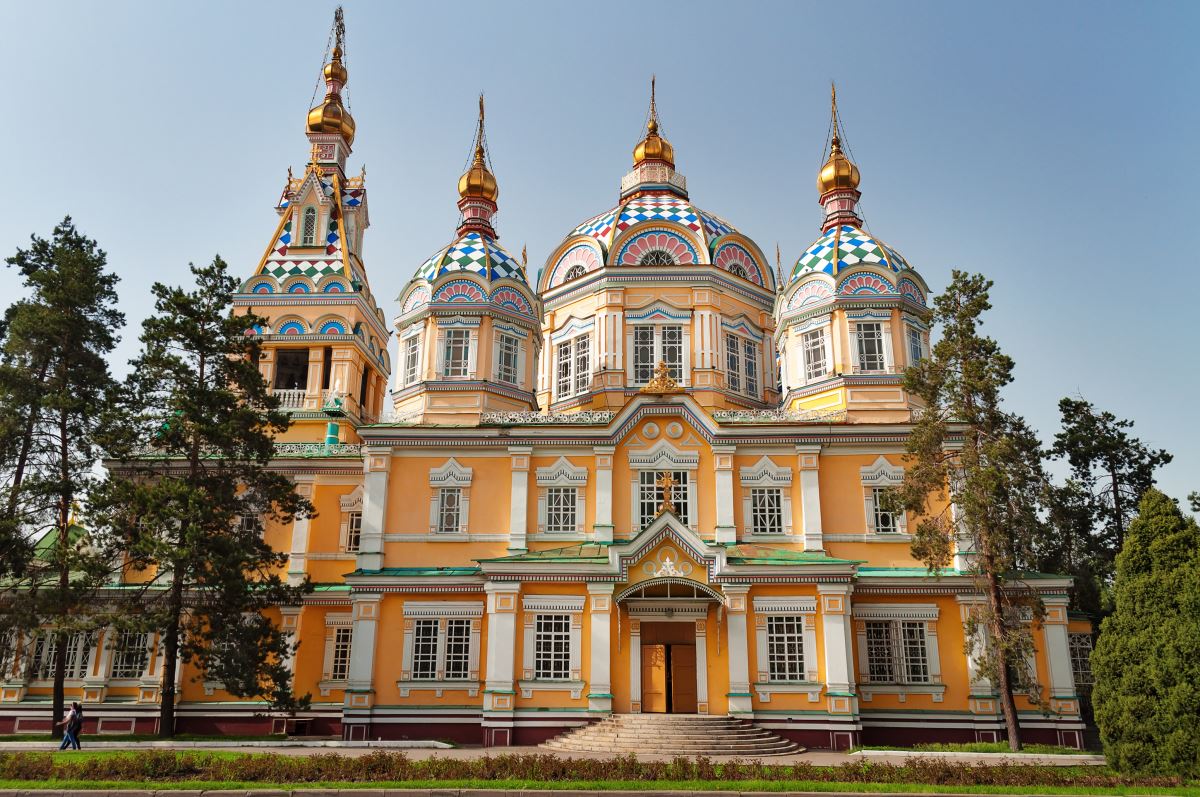 Alamty, Kazakhstan
Almaty stands in stark contrast to the other Silk Road cities on this list. Dating back to the Bronze Age, the settlement was ruled by the Saka and then the Wusun tribes before becoming a key centre of craft and trade along the Silk Road.
As the shipping trade grew and the Silk Road routes declined, the Kazakh state was born. The Russians also exerted their influence over the area, resulting in what is now a unique, cosmopolitan city. Walk amongst gleaming monuments, sprawling parks, beautiful buildings, and visit Zenkov Cathedral – built entirely from wood, with no nails!
Want to explore the legendary Silk Road first-hand?
Get in touch with our Travel Specialists today to start planning the ultimate adventure.